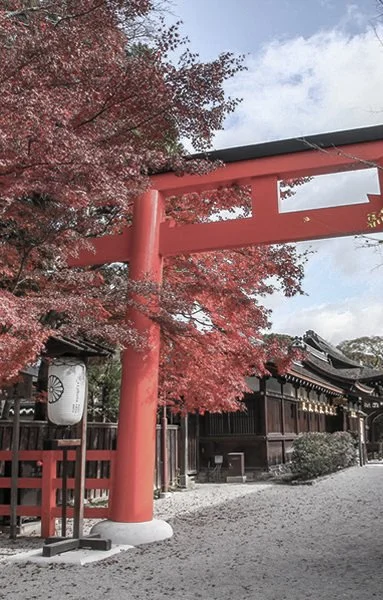
Shimogamo-jinja
Shrine
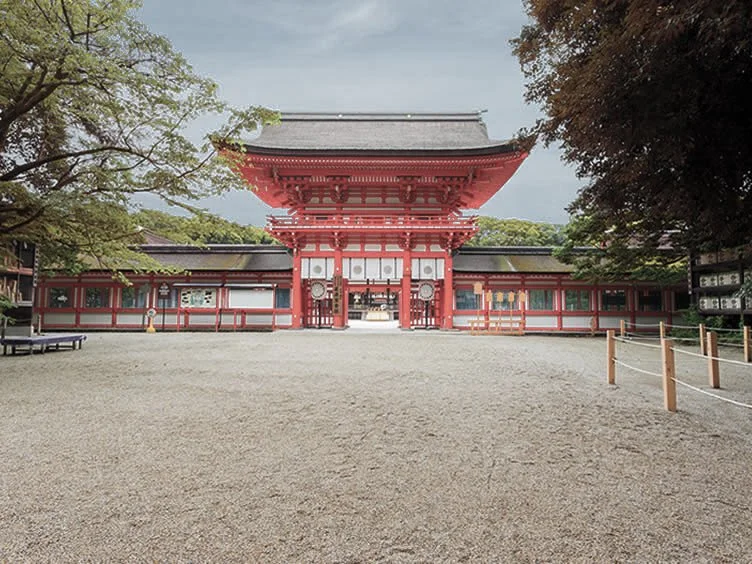
Shimogamo Shrine is one of Kyoto's oldest and most revered Shinto sanctuaries, with a history that predates the founding of the city itself. Located where the Kamo and Takano Rivers meet, the shrine has long been regarded as a place of spiritual importance and continues to play a central role in Kyoto's cultural life.
The approach to the shrine leads through Tadasu no Mori, an ancient woodland that has remained largely untouched for centuries. The forest creates a peaceful transition from the city to the shrine, where vermilion buildings, broad gravel pathways and traditional architecture reflect the enduring principles of Shinto design.
Dedicated to the Kamo deities, Shimogamo Shrine has maintained close ties to the Imperial Court throughout its history. Each May, it serves as one of the principal venues of the Aoi Matsuri, one of Kyoto's three great festivals, where an elegant procession in Heian-period dress celebrates traditions preserved for more than a thousand years.
A visit to Shimogamo Shrine offers more than an introduction to Kyoto's spiritual heritage. Its remarkable setting, centuries of uninterrupted history and atmosphere of quiet reflection make it one of the city's most rewarding places to experience the enduring relationship between nature, faith and tradition.