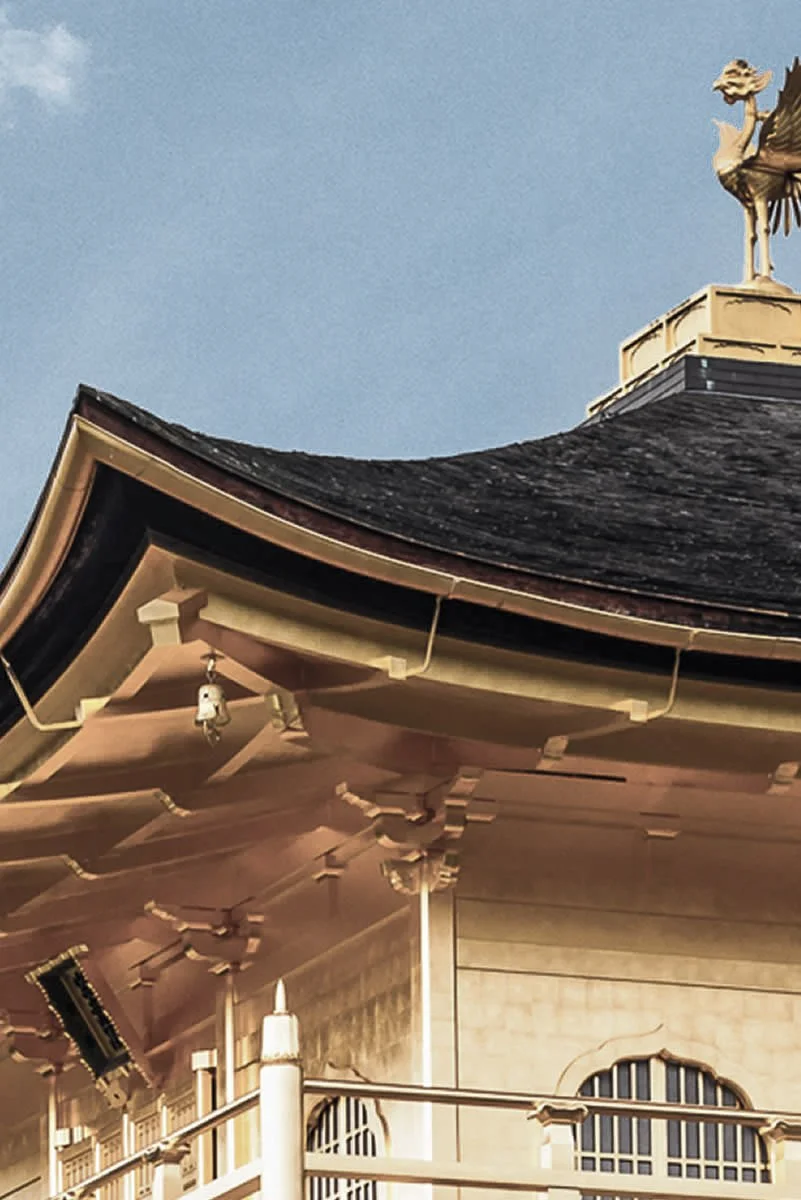
Kinkaku-ji
Temple
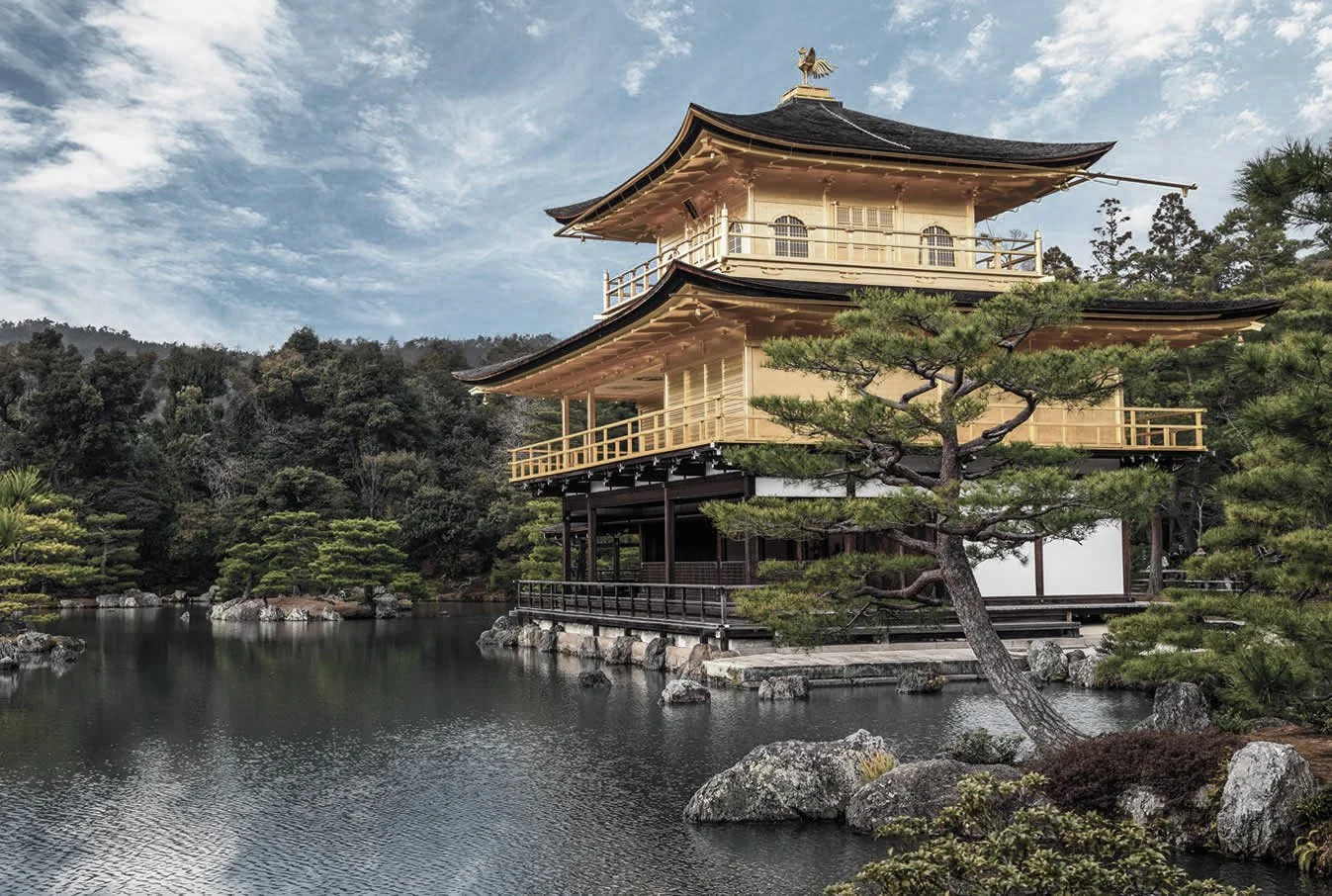
Kinkaku-ji, the Golden Pavilion, is among Kyoto's most celebrated landmarks and one of Japan's finest examples of Muromachi-period architecture. Rising above a mirror-like pond, its upper two floors are entirely covered in gold leaf, creating a striking reflection that changes with the seasons and the light throughout the day.
Originally built in 1397 as the retirement villa of Shogun Ashikaga Yoshimitsu, the estate was later converted into a Zen Buddhist temple in accordance with his wishes. Each of the pavilion's three levels represents a different architectural style, reflecting the cultural influences of aristocratic, samurai and Zen traditions.
A gently winding garden path leads visitors through carefully composed landscapes of pine trees, islands and ornamental stones before revealing the pavilion from a series of thoughtfully framed viewpoints. While entry to the building itself is not permitted, the surrounding gardens offer one of Kyoto's most memorable walking experiences.
Recognised as a UNESCO World Heritage Site, Kinkaku-ji remains an enduring symbol of Kyoto's cultural heritage. Whether visited beneath spring blossoms, vibrant autumn foliage or a blanket of winter snow, the Golden Pavilion offers a timeless glimpse into the elegance and spiritual tradition that define the city.