Kennin-ji Samon
Temple
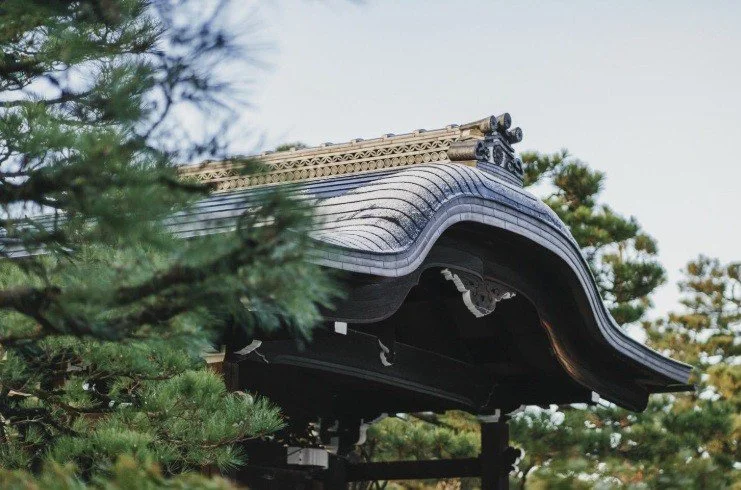
Kennin-ji Samon, the tea gate of Kyoto's oldest Zen temple, offers a quieter expression of the city's cultural heritage. Located within the historic grounds of Kennin-ji in southern Higashiyama, the gate marks the transition from the lively streets of Gion to an environment shaped by contemplation, craftsmanship and centuries of Zen tradition.
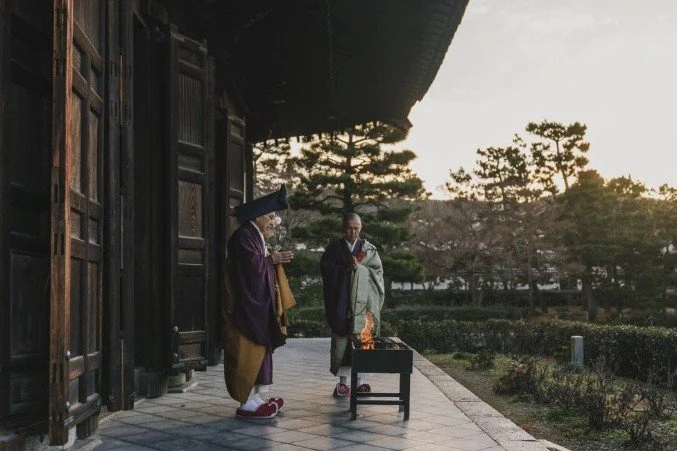
Founded in 1202 by the monk Eisai, Kennin-ji is the oldest Zen temple in Kyoto and played a defining role in establishing Rinzai Zen in Japan. The Samon, or tea gate, reflects the close relationship between Zen Buddhism and the Japanese tea ceremony, where simplicity, mindfulness and careful attention to detail became enduring principles of Kyoto's cultural identity.
Constructed from weathered timber and surrounded by stone pathways and mature gardens, the gate embodies the restrained elegance for which Zen architecture is renowned. Rather than relying on grandeur, its beauty lies in proportion, natural materials and the quiet harmony between the built environment and the surrounding landscape.
Beyond the gate, visitors can explore temple halls, peaceful gardens and some of Kennin-ji's most celebrated cultural treasures, including the remarkable Unryū-zu (Twin Dragons), a monumental ink painting that spans the temple's ceiling, as well as historic screen paintings designated as Important Cultural Properties.
Throughout the year, the temple transforms with the seasons, from fresh spring greenery to vibrant autumn foliage, offering a different perspective with every visit. Kennin-ji Samon provides not only an introduction to one of Kyoto's most significant Zen temples, but also an opportunity to experience the quiet refinement that has shaped the city's artistic and spiritual traditions for more than eight centuries.